
Correction (November 17, 2026): This guide originally said the six subjects carry equal weight, that each has 100 items, and that passing rates usually run 70–85%. PRC’s official program weights the subjects from 15% to 20%, and the April 2026 passing rate was 57.26%. We also moved pharmacy laws to Pharmaceutics, where PRC tests them, and removed study-plan dates tied to a December exam. For 2027 dates, see our PhLE 2027 schedule guide.
Update (October 22, 2026): Per PRC’s official 2026 schedule, the second 2026 Pharmacist Licensure Exam was held on October 15–16, 2026, not December. The results are out: 3,830 of 4,944 passed (77.47%). See the full results, Top 10 and top pharmacy schools.
The Pharmacist Licensure Examination (PhLE) is one of the most disciplined healthcare board exams in the Philippines. It is given by the Board of Pharmacy under the Professional Regulation Commission (PRC) twice a year. In 2026 it was held on April 18–19 and October 15–16. The second exam is much larger: 3,830 of 4,944 passed in October 2026 (77.47%), while 1,085 of 1,895 passed in April 2026 (57.26%). Expect April and October sittings in 2027 once PRC releases its official calendar. This guide gives you a 16-week study roadmap, the six subjects with PRC’s official weights and high-yield topics, common pitfalls, and a 5-question mini diagnostic at the end.
PhLE at a Glance
- Exam schedule: twice a year (April and October in 2026), two days, six subjects
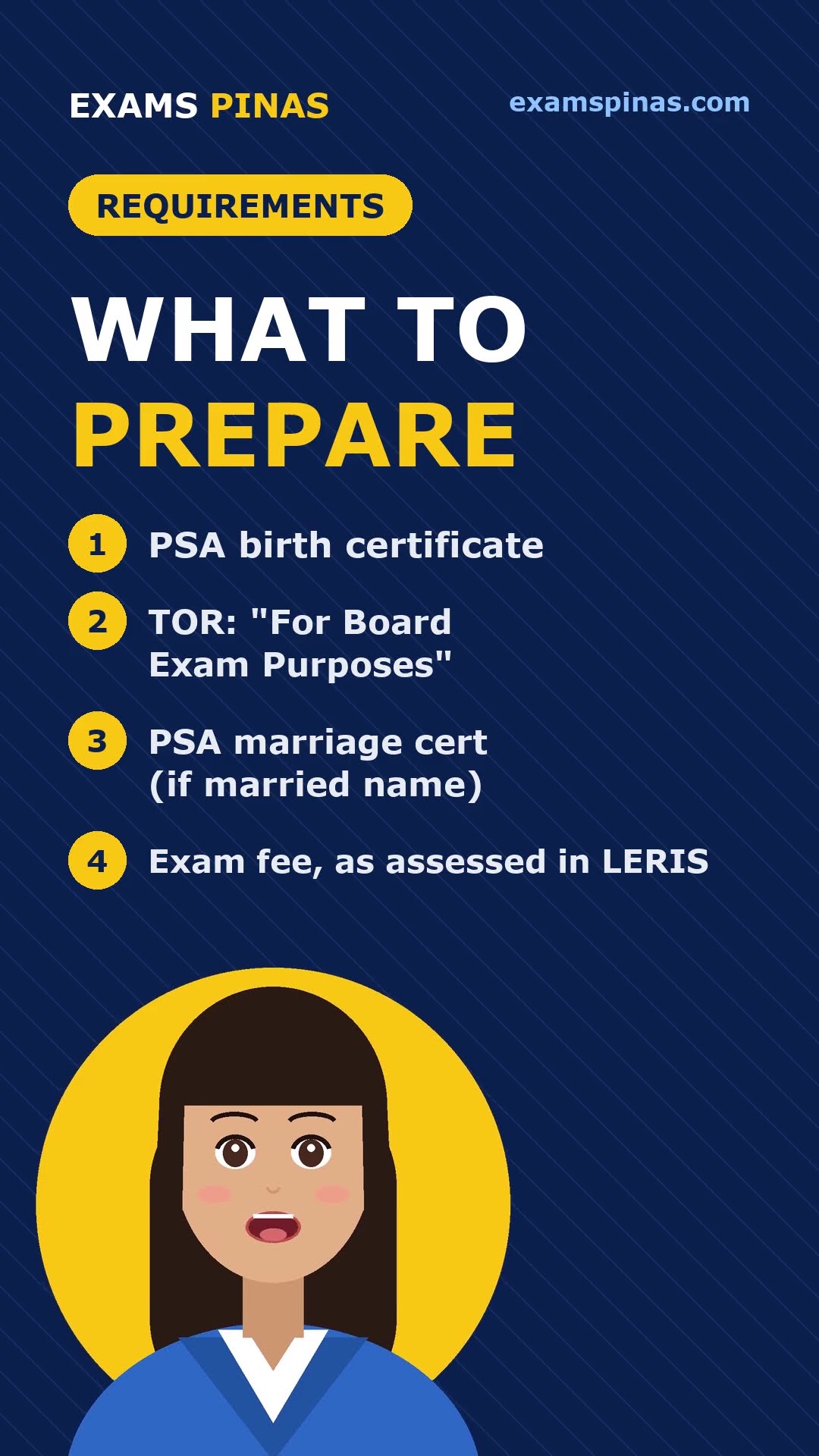
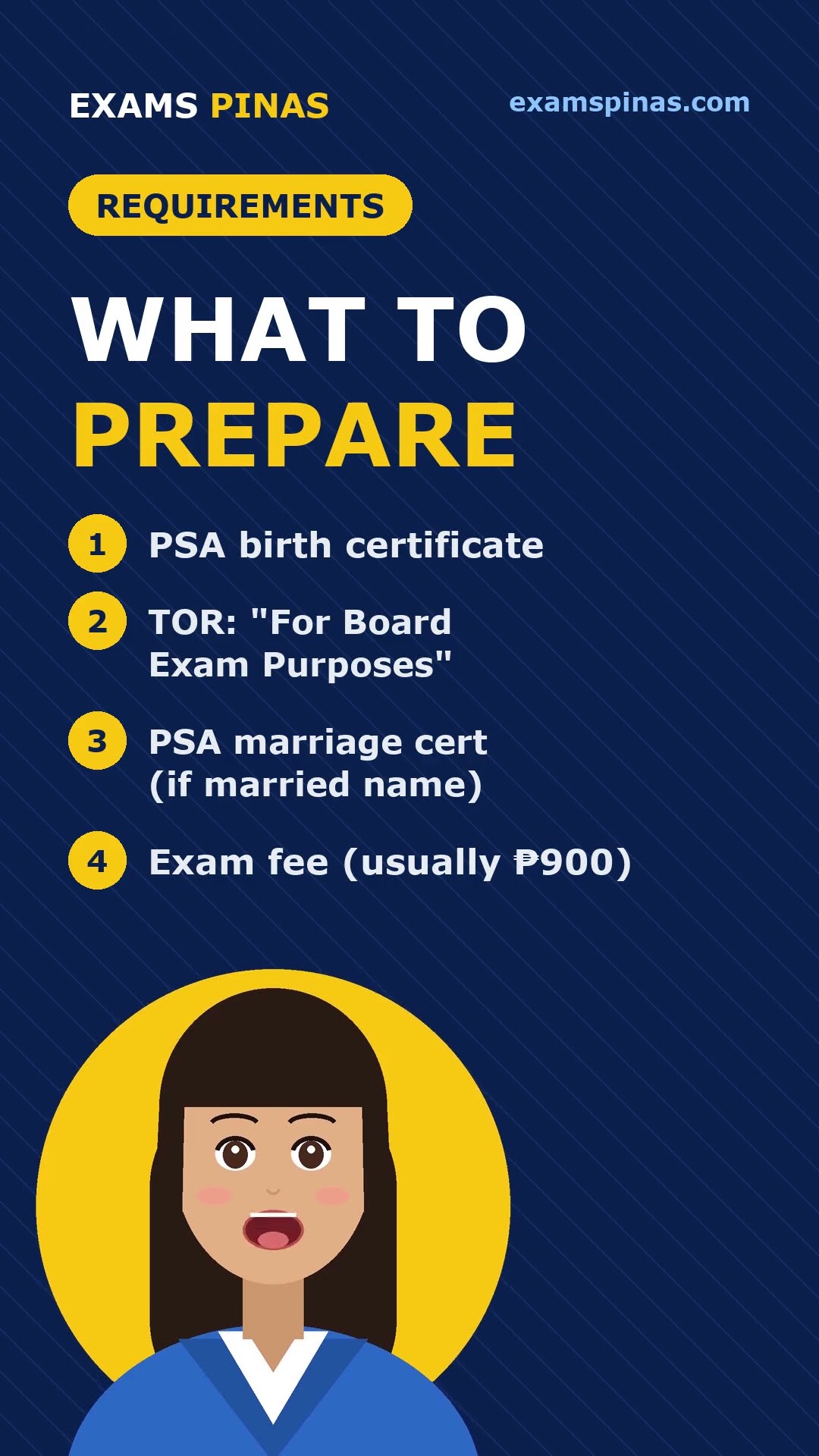
- Filing: through LERIS. In 2026, filing ran January 16 – March 20 for the April exam and July 31 – September 29 for the October exam.
- Testing centers: Manila, Baguio, Cebu, Davao, Iloilo, Legazpi, Tacloban, Cagayan de Oro, Pagadian, Zamboanga, Tuguegarao (subject to PRC confirmation)
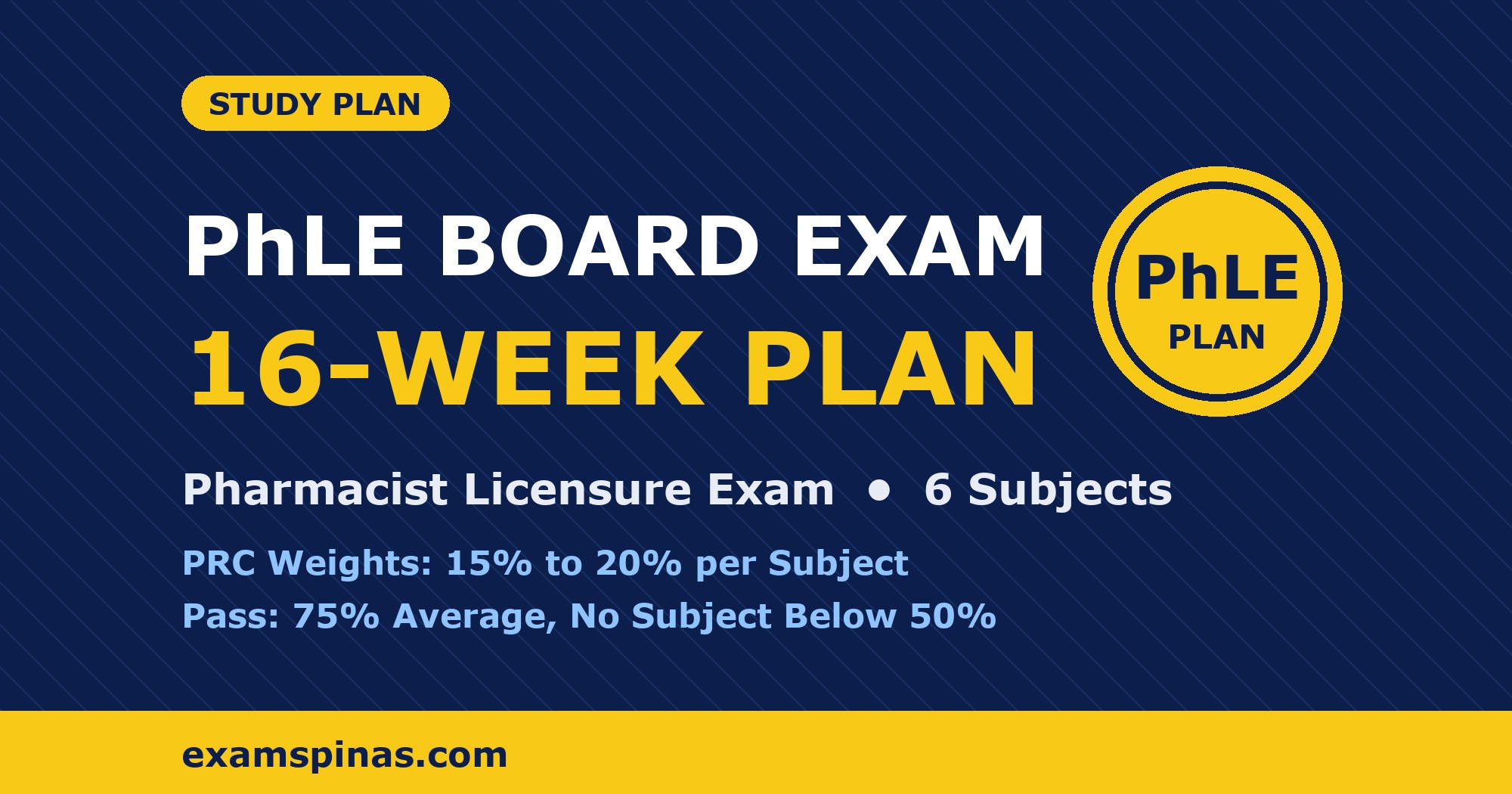
- Passing average: a general weighted average of 75%, with no grade lower than 50% in any single subject
- Number of subjects: six
- Format: three subjects each day, in sessions of 1.5 to 2 hours, per PRC’s official exam program.
- Calculator allowed: a non-programmable scientific calculator is permitted in computational subjects (Pharmaceutics, Pharmaceutical Chemistry, Quality Assurance)
The Six PhLE Subjects and Their Official Weights
The six subjects are not equally weighted. In PRC’s October 2026 program, Pharmaceutical Chemistry is 20%, Pharmaceutics and Practice of Pharmacy are 17.5% each, and Pharmacognosy/Biochemistry, Pharmacology-Pharmacokinetics and Quality Control/Quality Assurance are 15% each. You still need at least 50% in every subject, so treat none as an afterthought. Here is the breakdown with high-yield topics:
1. Pharmaceutical Chemistry (20%): Inorganic, Organic and Qualitative
- Drug classification by structure: beta-lactams, sulfonamides, tetracyclines, macrolides, fluoroquinolones, statins, NSAIDs, opioids, benzodiazepines, antihypertensives.
- Structure-activity relationships (SAR) for major drug classes — this is the highest-yield topic. Know what each functional group contributes to activity, solubility, and metabolism.
- Drug metabolism pathways: Phase I (oxidation, reduction, hydrolysis — mostly CYP450 enzymes) and Phase II (conjugation: glucuronidation, sulfation, acetylation). Memorize the major CYP isoforms (3A4, 2D6, 2C9, 2C19, 1A2) and their substrates/inhibitors/inducers.
- Acid-base chemistry and the Henderson-Hasselbalch equation. Be ready to compute the ionized vs. unionized fraction of a drug at a given pH.
- Analytical methods: UV-Vis, HPLC, GC, IR, NMR, mass spec — know what each is used for and the kind of information each provides.
- Stereochemistry: enantiomers, diastereomers, racemates. Know examples like S-warfarin (more active), R-thalidomide vs. S-thalidomide (teratogenic), levofloxacin vs. ofloxacin.
2. Pharmaceutics (17.5%): Dosage Forms, Manufacturing, Physical Pharmacy, Jurisprudence and Ethics
- Dosage form design: tablets (granulation, compression, coating), capsules, suspensions, emulsions, ointments, creams, suppositories, parenterals, inhalers, transdermals.
- Excipients and their functions: diluents, binders, disintegrants, lubricants, glidants, preservatives, surfactants. Examples are heavily tested — memorize at least 3 common examples per category.
- Biopharmaceutics and pharmacokinetics: ADME (absorption, distribution, metabolism, excretion). Calculate clearance, volume of distribution, half-life, bioavailability, and AUC.
- BCS classification (Biopharmaceutics Classification System): the four classes based on solubility and permeability, and what each implies for formulation strategy.
- Stability testing: ICH zones (Philippines is Zone IVb — hot and very humid), accelerated and long-term conditions, shelf-life prediction.
- Compounding calculations: dilutions, aliquots, alligation, percent strength, ratio strength, milliequivalents, isotonicity (sodium chloride equivalent method).
3. Pharmacology-Pharmacokinetics (15%): Drug Action, Toxicology, Adverse Reactions
- Autonomic pharmacology: cholinergic vs. adrenergic agonists and antagonists, receptor subtypes (alpha1, alpha2, beta1, beta2, M1–M5, nicotinic), clinical uses, and side effects. This is the most-tested area in Pharmacology.
- Cardiovascular drugs: ACEi, ARBs, beta-blockers, calcium channel blockers, diuretics, antiarrhythmics (Vaughan-Williams classification), anticoagulants (warfarin, heparin, DOACs), antiplatelets, statins.
- Antimicrobials: full mechanism, spectrum, resistance, and adverse effects for each major class. Know which drugs need renal dose adjustment, which are nephrotoxic (aminoglycosides, vancomycin), and which are ototoxic.
- CNS drugs: antipsychotics (typical vs. atypical), antidepressants (SSRIs, SNRIs, TCAs, MAOIs), anxiolytics, anticonvulsants, opioids, anesthetics.
- Endocrine drugs: insulin and oral antidiabetics, thyroid drugs, corticosteroids, sex hormones, contraceptives.
- Toxicology: common poisonings and their antidotes — this comes up every cycle. Memorize at least 15 pairs (acetaminophen and N-acetylcysteine, opioids and naloxone, benzodiazepines and flumazenil, warfarin and vitamin K, heparin and protamine, methanol and fomepizole, organophosphates and atropine plus pralidoxime, iron and deferoxamine, etc.).
4. Pharmacognosy/Biochemistry (15%): Plant Chemistry and Natural Products
- Alkaloids: morphine and codeine (Papaver somniferum), atropine and scopolamine (Atropa belladonna, Datura), quinine (Cinchona), reserpine (Rauwolfia), vincristine and vinblastine (Catharanthus roseus), caffeine (Coffea, Camellia).
- Glycosides: digoxin and digitoxin (Digitalis), senna (Cassia angustifolia), aloe (Aloe vera).
- Terpenoids and volatile oils: peppermint, eucalyptus, lemongrass, ginger, turmeric.
- Tannins, flavonoids, saponins: their plant sources, structures, and pharmacological uses.
- Philippine Traditional Medicines under the DOH Sampung Halamang Gamot (Ten Medicinal Plants) program: lagundi, sambong, akapulko, niyog-niyogan, tsaang gubat, ampalaya, bayabas, ulasimang bato, yerba buena, bawang. Know the scientific names, active constituents, and indications. This is a high-yield Pinoy-specific topic.
- Crude drug evaluation: organoleptic, microscopic, chemical, biological methods. Know moisture content, ash values, extractive values, and their significance.
5. Practice of Pharmacy (17.5%): Compounding-Dispensing, Clinical/Hospital Pharmacy, Calculations
- Patient counseling: drug-drug interactions, drug-food interactions, common side effects, proper administration techniques (inhalers, insulin injections, ophthalmic drops, suppositories).
- Pharmaceutical care process: drug therapy problem identification (indication, effectiveness, safety, adherence), care plan, monitoring, follow-up.
- Hospital pharmacy operations: unit dose dispensing, IV admixture, total parenteral nutrition (TPN), drug distribution systems, formulary management.
- Pharmacoeconomics: cost-minimization, cost-effectiveness, cost-utility, cost-benefit analysis — know the differences and when each applies.
- Compounding standards: USP 795 (non-sterile) and USP 797 (sterile), beyond-use dating, environmental controls.
- Adverse drug reaction (ADR) reporting and pharmacovigilance under the FDA Philippines framework.
6. Quality Control/Quality Assurance (15%) and Pharmacy Laws
Note: In PRC’s program, Quality Control/Quality Assurance covers drug testing with instrumentation, microbiology and public health. The pharmacy laws and ethics below are tested under Pharmaceutics. Study both.
- Republic Act No. 10918 (Philippine Pharmacy Act of 2016): scope of pharmacy practice, qualifications, registration, ethical standards, penalties. Memorize the key provisions — this is the foundational law and every cycle tests it.
- Republic Act No. 9711 (FDA Act of 2009): powers of the FDA Philippines, product registration, recall procedures.
- Republic Act No. 9165 (Comprehensive Dangerous Drugs Act of 2002): regulated drugs, prescription requirements, S-2 license, penalties.
- Republic Act No. 6675 (Generics Act of 1988): generic labeling, mandatory generic prescribing in government, role of the pharmacist.
- Good Manufacturing Practice (GMP): documentation, validation, quality control vs. quality assurance, sampling and testing, batch release.
- Pharmaceutical jurisprudence ethics: confidentiality, conflict of interest, dispensing across state lines, refusal to dispense.
16-Week PhLE Study Roadmap
Count back 16 weeks from your exam date. For an April exam, that means starting in early-to-mid December; for an October exam, starting in late June. Here is a study structure that works for either:
- Weeks 1–2: Diagnostic and Plan. Take a full-length mock exam from a reputable review center (PIPHCC, MERIT, MELJUN, or similar). Score yourself per subject. Identify your two weakest subjects — you will return to these last and most often.
- Weeks 3–5: Pharmaceutical Chemistry + Pharmacognosy. Build foundation in structures and natural product sources. Daily: 4 hours content review, 50 practice items with rationale.
- Weeks 6–8: Pharmaceutics + Quality Assurance/Jurisprudence. Drill calculations daily (compounding, dilutions, kinetics). Memorize the 4 major pharmacy laws.
- Weeks 9–11: Pharmacology + Pharmacy Practice. The two heaviest subjects in terms of memorization. Build drug class flashcards. Practice counseling scripts aloud.
- Week 12: Full-Length Mock 1. Take 100 items per subject across two simulated days. Score, analyze gaps.
- Weeks 13–14: Targeted Remediation. Go back to your weakest two subjects from Mock 1. Daily: 100 items per weak subject.
- Week 15: Full-Length Mock 2 + Final Review. Take another full mock under timed conditions. Compare to Mock 1. Refine memory hooks for tricky topics.
- Week 16: Taper and Recall. No new content. Quick recall sessions, flashcards, and lots of sleep. Mental health and rest are part of the exam strategy — do not cram the last 48 hours.
Common Pitfalls That Sink PhLE Candidates
- Treating Pharmacognosy as easy. It looks like memorization but the volume of plant sources, scientific names, and active constituents is enormous. Start it early.
- Neglecting Pharmacy Practice because it feels "real-world." The PRC tests specific protocols, calculations (TPN, IV drips), and pharmaceutical care frameworks that are easy to lose points on if you wing it.
- Memorizing without understanding mechanisms. Pharmacology questions often rephrase the same concept in three different ways — you need the mechanism to answer all three.
- Skipping computational practice. Compounding calculations, kinetics, and biopharmaceutics math are calculator-allowed but still time-pressured. Build speed.
- Cramming the last week. The PhLE is two long days back-to-back. Mental endurance matters more than last-minute facts.
- Ignoring Philippine-specific topics in favor of generic content. PRC favors Philippine laws, the Sampung Halamang Gamot, FDA Philippines protocols, and PhilHealth-related questions. International-only reviewers will miss these.
Recommended Resources
- Remington: The Science and Practice of Pharmacy — gold-standard reference for Pharmaceutics and Pharmacy Practice.
- Lippincott Illustrated Reviews: Pharmacology — concise, high-yield, with excellent diagrams.
- Foye’s Principles of Medicinal Chemistry — the bible for SAR and drug design.
- Trease and Evans’ Pharmacognosy — comprehensive natural products reference.
- Goodman and Gilman’s The Pharmacological Basis of Therapeutics — deep mechanism reference.
- Philippine Pharmacy Laws compilation from the PRC and FDA Philippines websites — free, official, and updated.
- Reputable review centers: PIPHCC, MERIT, MELJUN, Topnotchers — their mock exams are calibrated to PRC difficulty.
5-Question Diagnostic Mini Quiz
Try these five sample questions to gauge your current readiness. Each one targets a different PhLE subject. Click an answer to see if you got it right, with a full rationale.
💊 PhLE Mini Diagnostic — 5 Items
One item per subject • Instant rationale • Test your PhLE readiness
Final Word
The Pharmacist Licensure Examination rewards consistent daily preparation over heroic last-minute marathons. The candidates who pass and place in the Top 10 are not the ones who studied 18 hours a day for two weeks — they are the ones who studied 5–6 focused hours a day for 16 weeks, took mock exams seriously, and rested in the final week. The PRC tests breadth, not just depth, and your weakest subject will pull your weighted average down faster than your strongest subject can pull it up. Be honest about your weak areas, drill them deliberately, and keep moving.
Good luck, future Registered Pharmacist. We’re rooting for you. See you on the other side.